 Anglo-American University in Prague
 Poem Factory Workshop


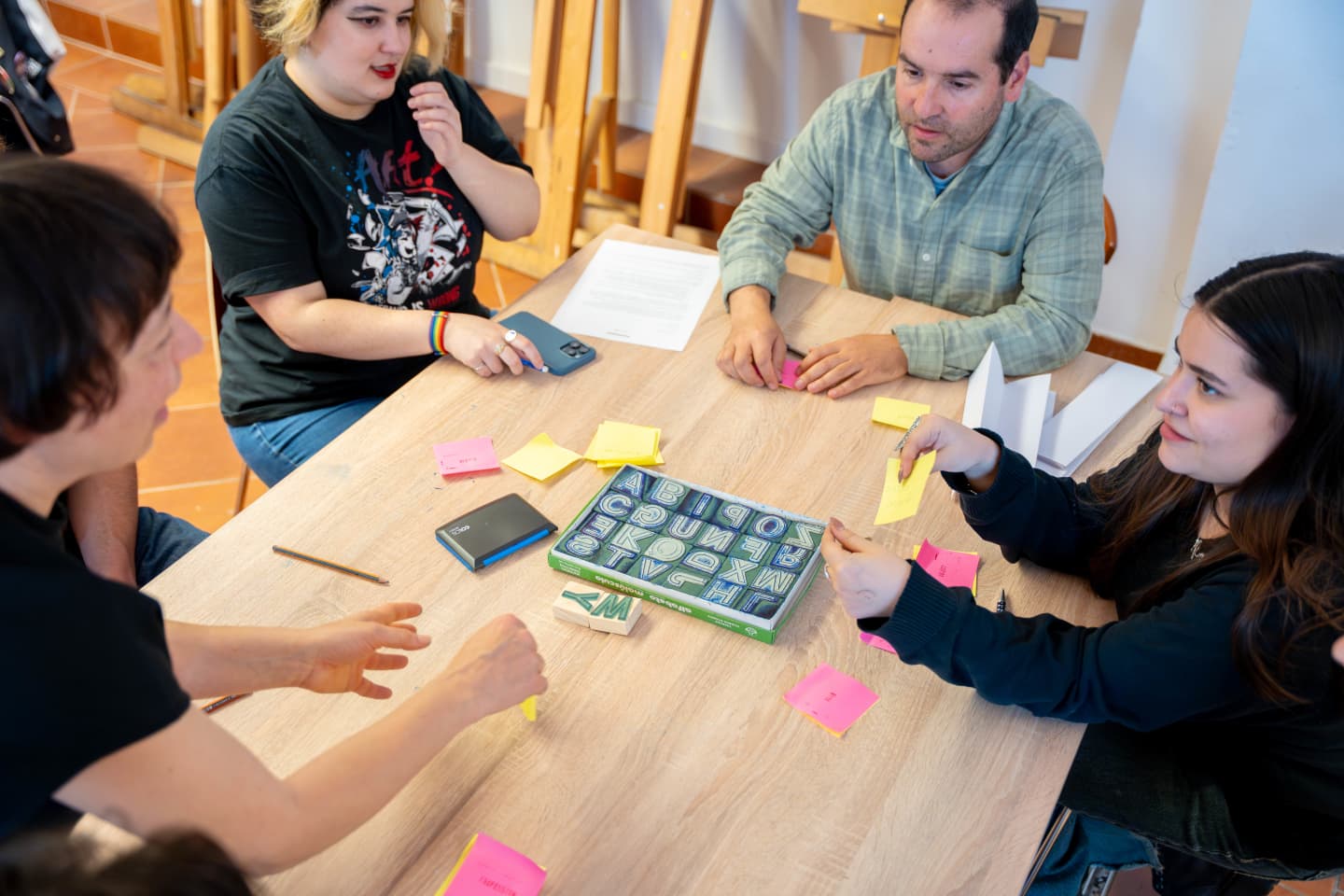
Guest artists and professors Susana Camanho and José Miguel Cardoso from the Polytechnic University of Viana do Castelo—AAU’s Visual Arts study partner university— led a collective interactive workshop where students playfully connected words to create poems and printed them using stamps with the idea that “poetry must be made by all.”
Organized by Senior Lecturer Alena Foustková who did a teaching exchange at IPVC, the workshop was designed to explore unexpected creative potential within a group where no special knowledge or experience with art was required.
“I have often used letter stamps in my artistic practice as I have worked over many years with the overlap of literal and visual meaning. The printed letter stamps can add individual character to the visuality of words—just like in the Poetry Factory Workshop. Words can add texture and visual impact to an image,” said Foustková.
The origins of the Poem Factory Workshop are based in Portugal’s history with stamps which were designed for schooling during the 70s and 80s with a wide range of images and symbols across many subjects, and later they spread across more disciplines and in Portuguese life.
“It was a kind of Google Images of the 70s and 80s where no matter what it was, there was always a visual representation in the form of a stamp, used with writings and drawings which were produced and reproduced in different ways and infinite contexts,” said Camanho.
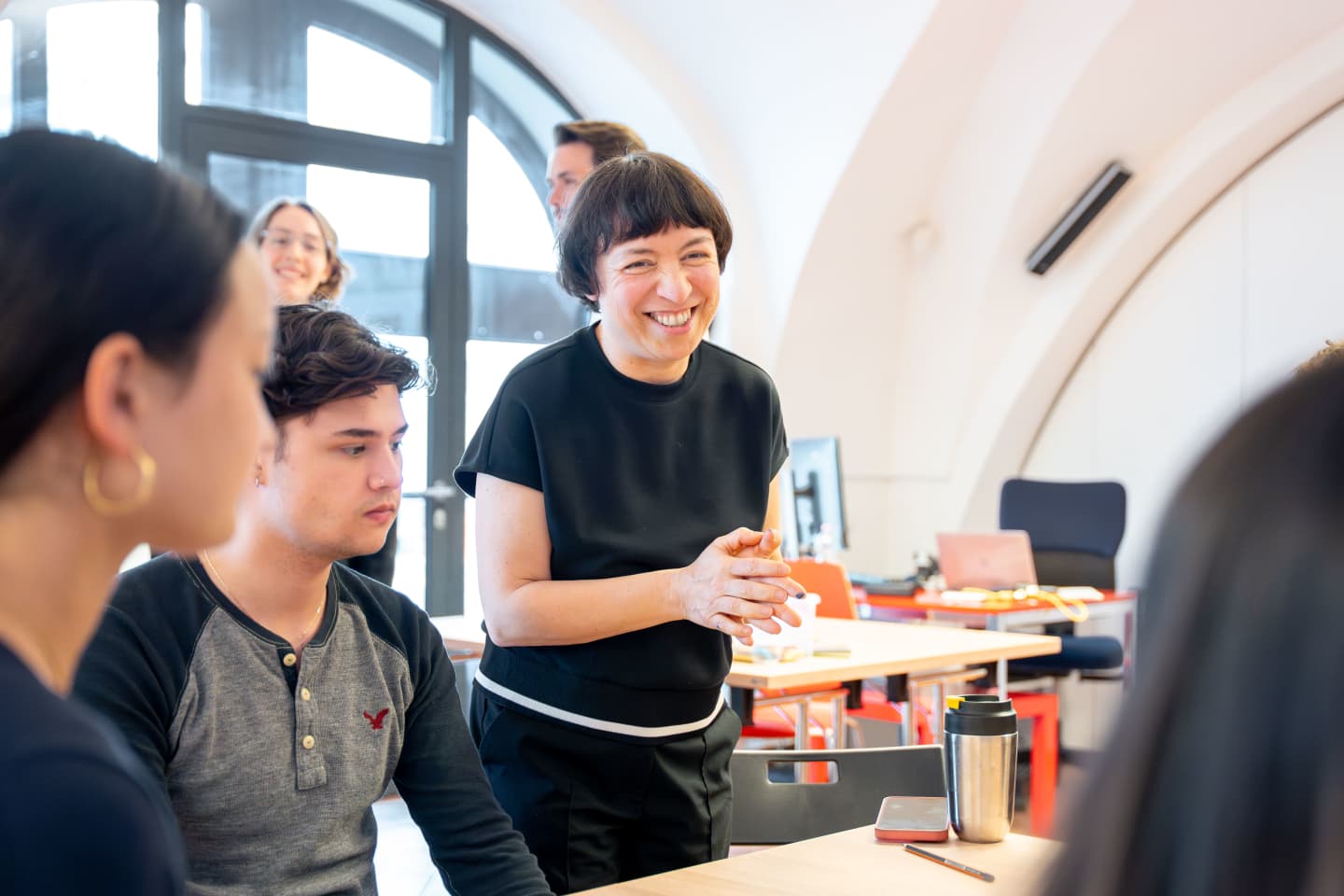

Groups of students were tasked to each write one word—either an animal, adjective, verb, colour, profession, or noun—hiding it from each other. Then, the words were revealed and ordered in any number of different combinations until the final poem was decided on and stamped.
The idea was to investigate how supposedly obsolete objects can be rescued and recovered from flea markets and vintage stores in present artistic practice. The method students followed during the Poem Factory Workshop comes from the idea of the Exquisite Corpse—a collaborative method to create spontaneous, often absurd art—within the Surrealist movement that often rejects the privilege of talent and genius.
“Whether recreated or reproduced, the markers of a trade from the past offer us clues to understanding the present. Each image gives substance, as John Berger put it, “to a way of seeing,” said Camanho.

In Foustková’s course Concept: Pursuing an Idea in the Art Process, she teaches various conceptual approaches, including examples of surrealism which was one of the art movements that developed from a greatly innovative and influential art movement in the early 20th century called DADA. It worked with the subconscious, chance, play, and also often practiced collective activity.
“The poetry of the collectively developed sentence is an act of play, finding meaning in absurdity. The creative process is often unconscious and very different from the structured thinking required in other, more logical areas of study which students are typically exposed to. The process is not only a way to relax their minds from the daily demands of their topics, but also a completely new experience enriching their sensitivity,” said Foustková.
Check out photos from the workshop on AAU’s Flickr.