 Anglo-American University in Prague
 A Window into the Life of AAU’s Director of the Institute of Applied Psychology


“Psychology is a beautiful discipline—full of contradictions, dynamics, and tensions. These tensions are not conflicts in the sense of disputes, but rather invitations to think, reflect, and grow,” said doc. Gabriela Málková.
Gabriela Málková is the BA in Psychology Program Director, the Director of AAU’s Institute of Applied Psychology, and a Lecturer in the School of Arts, Humanities, and Social Sciences. An accomplished academic and educator, she is passionate about literacy development, early language and phonological skills, and advancing research that bridges theory and practice. Málková is dedicated to the transfer of psychological research findings into applied counseling practice which AAU’s program specializes in.
“I strongly believe that psychology should not remain only in academic journals, but should meaningfully inform professional practice and everyday life,” said Málková.
What is your vision behind AAU’s B.A. in Psychology?
This program was created as a new space to study psychology in English in the Czech Republic to educate psychologists who will be able to think globally and responsibly. Our vision is to combine academic foundation and real-world readiness from day one. Psychology is taught at AAU in small classes, and students are truly seen, heard, and supported here. From their first class, students learn what it is like to work in diverse settings. AAU brings theory, practice, and cultural diversity in one place.
Tell us about yourself and what brought you into education?
My professional background is rooted in educational psychology. Before joining AAU, I spent nearly twenty years at Charles University’s Faculty of Education and of Humanities. I taught across bachelor’s, master’s, and doctoral programs, led research teams, and was involved in academic leadership and advisory bodies.
I did not originally plan to pursue an academic or research career in psychology. During my studies, I was drawn to applied school and counseling psychology. However, life took an unexpected turn when—shortly before completing my studies—my master’s thesis supervisor offered me a position at a newly established interdisciplinary research center at Charles University with the possibility of starting my PhD.
During my exchange at the University of Liverpool, I developed a new relationship with psychological research. As my supervisor and mentor, Prof. Markéta Caravolas inspired me to appreciate teaching and academic work. My interest expanded to include questions of how psychology can be taught well, how students learn, and how research can be meaningfully transferred into professional practice—and this is what continues to motivate my work today.
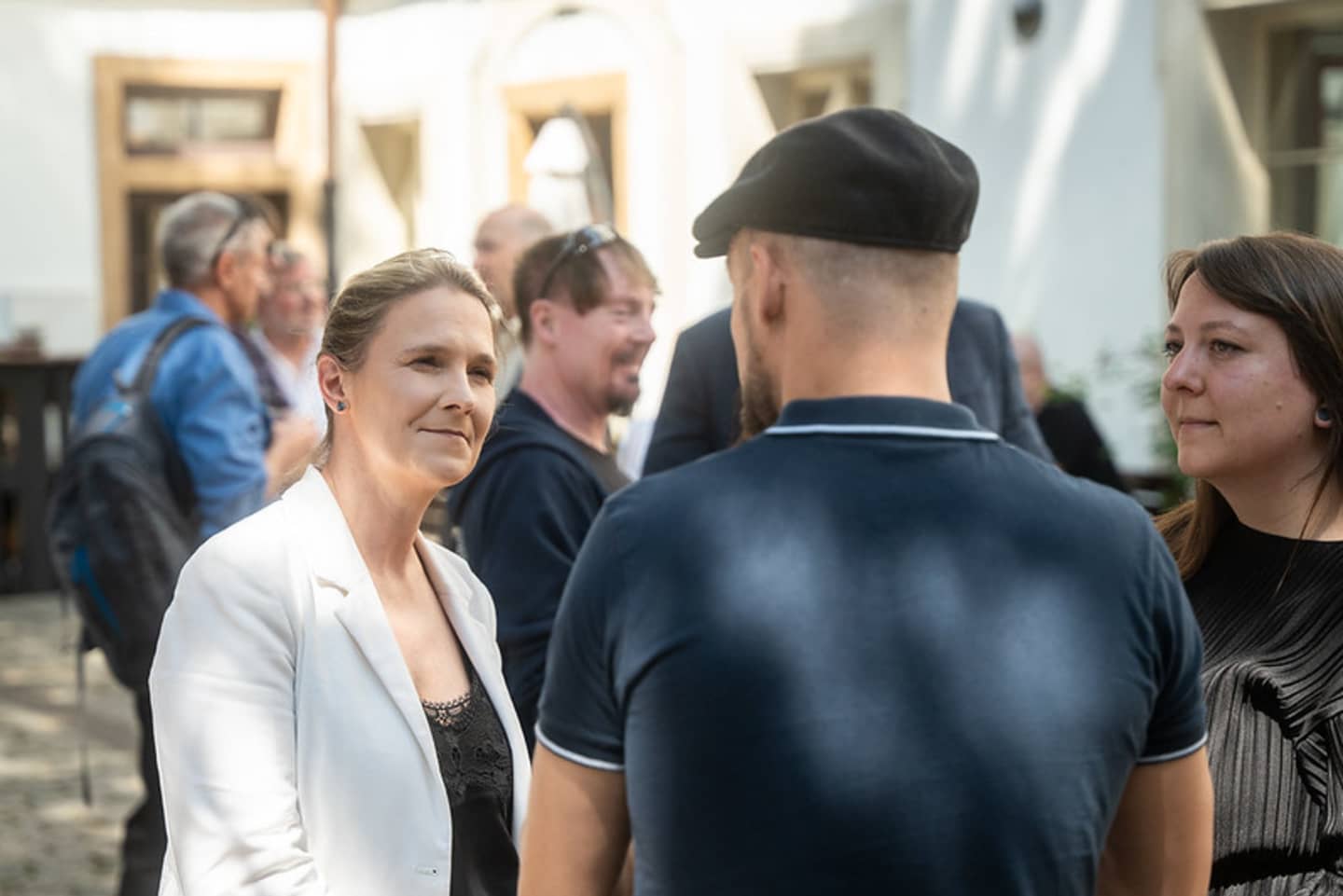
Beyond my academic roles, I see myself as a very ordinary person, a mother, and someone who deeply values family and friendships. I enjoy spending time in nature, traveling, and experimenting in the kitchen—from everyday meals and baking to bread-making, working with herbs, and fermentation.

What made you passionate about psychology, specifically teaching psychology?
I have always been a rather systematic person; I like structure and clarity, and I have always felt a strong need to understand people and the world around me. My interest in psychology grew naturally from this desire to understand human lives, their stories, joys, and struggles.
Like many students, I originally chose psychology because I genuinely wanted to help others. That motivation has stayed with me, and my passion for teaching developed gradually. Preparing seminars and lectures has always been a challenge for me—and it still is. I am not a natural performer or entertainer, and I often feel a healthy sense of nervousness before teaching. What truly motivates me are my students.
Teaching becomes deeply meaningful when I see that a class inspires reflection, opens new perspectives, or gently shifts how students think about themselves and the world. I see the classroom as a kind of inquiry community where learning is not a one-way transfer of knowledge, but a shared process. I value it greatly when students bring their own experiences, questions, and perspectives to class and when the course begins to resonate with their lives.
How does AAU’s Psychology program combine theoretical foundations with practical, hands-on learning in the curriculum?
AAU’s psychology program integrates theoretical foundations with practical, hands-on learning from the very first semester. Students are introduced early on to what it means to think and work as a psychologist. Active professionals from diverse areas of psychology are regularly invited into the classroom to share real-world experiences from different professional settings, allowing students to see how psychological knowledge is applied across various fields.
Members of the department are strongly committed to supporting students in finding meaningful individual projects, internships, and opportunities to participate in real research. Through these activities, students gain concrete experience in applying psychological concepts, contributing to relevant research questions, and developing their own professional interests.
Throughout the curriculum, students are guided to think critically, to understand human behaviour, and to reflect on how people think and make sense of the world—skills that form the foundation of both academic psychology and professional practice.

What do you think is lacking in our knowledge of psychology? How can psychology be an asset in other areas?
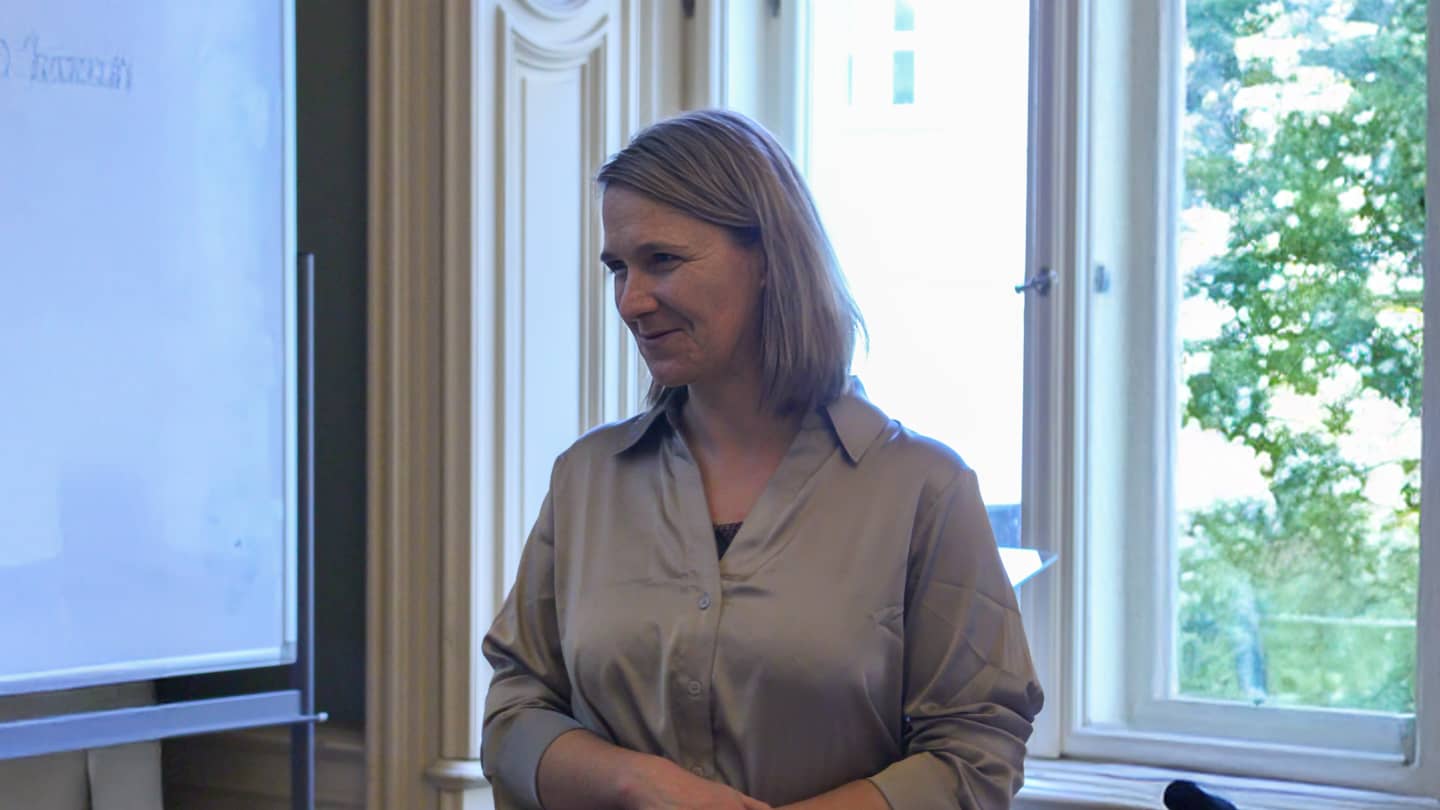
One of the challenges in how psychology is often perceived—and sometimes taught—is that it is reduced to a helping profession or a tool for solving personal problems. While this is certainly an important part of psychology, it represents only a small portion of what psychology as an academic and scientific discipline actually is.
Psychology offers a rich and well-developed set of concepts, methods, and empirical findings that help us understand how people think, learn, feel, behave, and make decisions. What is often lacking is not more theory, but the meaningful transfer of psychological knowledge into practice—whether in education, social policy, organizational contexts, or community life.
Where psychology can make a profound contribution is as know-how for educators, professionals, and institutions to help them work more thoughtfully with learning, motivation, development, self-regulation, and social interaction. A deeper psychological understanding can support greater empathy, better decision-making, more effective learning environments, and more realistic expectations of both individuals and institutions.
Do you have an inspiring or challenging teaching moments that stick with you?
Teaching in a hybrid format continues to challenge me. I still do not feel fully comfortable in those situations, and my students regularly end up helping me navigate the technology which has become a recurring and quite humbling experience. These moments remind me that learning in the classroom goes both ways. My students constantly teach me—not only technical skills, but also flexibility, patience, and openness.
What inspires me most is getting to know my students. I want to know why they are in my course, what they hope to learn, where they want to grow, and what questions or challenges they bring. Teaching at AAU has brought me back to my early academic years as I am once again teaching bachelor students while, for the past several years, I taught mostly advanced levels. The diversity of backgrounds—linguistic, cultural, and experiential—is remarkable and creates a dynamic environment that continuously challenges and inspires me.
AAU is known for its international and multicultural student body—how does that environment affect the classroom?
AAU is by nature an international academic environment which makes cultural differences a natural and daily part of the learning experience rather than an abstract concept. Students are encouraged to reflect on how culture shapes emotions, behaviour, and social relationships. Developing cultural sensitivity, respect, and open-mindedness is therefore not treated as an add-on, but as an integral part of psychological training.
Although the programme is based in the Czech Republic, it is fully embedded in the international, English-speaking academic context. This allows students to study psychology as it is currently taught, researched, and discussed globally while remaining grounded in a specific cultural and educational setting
For a prospective student deciding between psychology and another social-science track, what would you say are the strongest reasons to choose AAU’s Psychology B.A.?
Unlike many other social sciences, psychology offers a broad range of perspectives—from biological and cognitive approaches to social, developmental, and applied fields—often in productive tension with one another. Students who choose psychology are not preparing for a single narrow career path.
A bachelor’s degree in psychology opens doors to a wide range of professions: research and academics, education, healthcare, social services, public administration, non-profit organizations, and business environments which value analytical thinking and an understanding of human behaviour.
For students deciding between psychology and another social-science track, psychology offers a rare combination of intellectual depth, practical relevance, and long-term flexibility. It equips graduates with transferable skills that remain valuable across changing professional contexts, while also allowing them to pursue specialized paths as their interests develop.
For more information about the Psychology B.A., contact the admissions team at admissions@aauni.edu.